Heat Pump or Gas Furnace? What Actually Makes Sense in Montgomery County
The right answer depends less on brand preference and more on how many genuinely cold nights your winter actually has.
October 20, 2026 · 4 min read
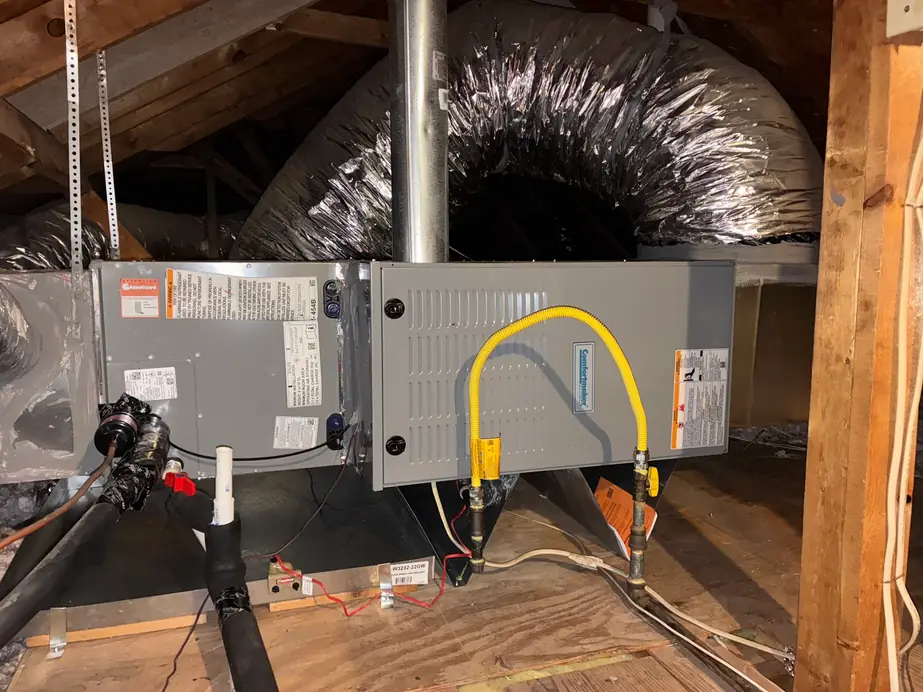
If you're replacing a system in Conroe, you'll eventually run into the heat pump versus gas furnace question, and a lot of the advice floating around online is written for climates that don't look anything like Montgomery County's. Here's how the two actually compare once you account for our specific mix of mild winters and long, humid summers.
A heat pump moves heat, a furnace makes it
A gas furnace burns fuel to generate heat directly. A heat pump does something different: it moves heat from one place to another, pulling warmth out of outside air, even cold air, and depositing it inside. In cooling mode it runs the same cycle in reverse, working exactly like an air conditioner. Because a heat pump is moving existing heat rather than manufacturing it, it can deliver more heating energy per dollar of electricity than straight electric resistance heat, especially in a climate where outdoor temperatures don't drop far below freezing for long stretches.
Why our winters favor the heat pump's strong suit
Heat pump efficiency drops as outdoor temperature drops, because there's less ambient heat available to move. That's a real limitation in genuinely cold climates. It matters far less here. Montgomery County winters are short and mostly mild, with occasional cold snaps rather than months of hard freeze, which plays directly to a heat pump's most efficient operating range. For a lot of homes in Conroe, The Woodlands, and Magnolia, a heat pump can comfortably carry both seasons on its own.
Where a gas furnace still wins
A gas furnace produces noticeably hotter air at the vent and doesn't lose capacity as it gets colder outside, which matters most during that handful of nights each winter when temperatures actually drop hard. If your household runs cold, if you already have gas service to the house, or if you simply want a system that performs identically no matter what the thermometer says outside, a furnace is a reasonable, proven choice. Some homeowners split the difference with a dual fuel setup, a heat pump handling the mild majority of winter with a gas furnace kicking in only on the coldest nights.
One more thing worth knowing is how a heat pump behaves on a cold, damp morning. The outdoor unit can collect frost on its coil, so it periodically runs a defrost cycle, and during that short cycle you may see a puff of vapor from the unit or notice the air at the vents cool off for a few minutes. That's normal operation, not a fault. What isn't normal is a unit that stays buried in ice for hours or never seems to finish defrosting, and that's worth a service call.
Ductless and geothermal options
Not every home needs a full central swap. Reliable Air & Heat also installs ductless mini split heat pumps, useful for additions, garage conversions, or rooms that never quite match the rest of the house, and water source and geothermal heat pump systems for homes where the site supports it. They're an American Standard Preferred Dealer, they list SureComfort equipment alongside it, and they name Mitsubishi Electric for ductless systems, so the equipment recommendation can be matched to the house rather than the other way around.
- Heat pump: efficient heating and cooling from one system, strongest fit for our mild winter climate, no gas line needed
- Gas furnace: consistent output regardless of outdoor temperature, familiar and durable, needs gas service
- Dual fuel: a heat pump for most of winter with a gas furnace as backup for the coldest nights
What to weigh before you decide
Your existing ductwork plays a bigger role in this decision than most people expect. A heat pump and a furnace both rely on ducts sized and sealed correctly to move the air they produce, so if your ductwork is already leaky or undersized, that's worth addressing regardless of which system you choose, otherwise neither option performs the way it's supposed to. It's also worth thinking about how your household actually uses heat. A family that keeps the thermostat low overnight and wants it to recover fast on a cold morning may lean toward a furnace's higher output air, while a household mainly looking to lower a year round electric bill may get more value out of a heat pump's efficiency in our climate.
Getting a straight answer for your house
The right call depends on your ductwork, your home's insulation, whether gas is already run to the house, and what you're trying to solve for on your utility bill. Reliable Air & Heat offers financing with approved credit through Wells Fargo Bank on both installations and repairs, so the decision doesn't have to be an all cash one. Call Reliable Air & Heat at 936-890-8991 to have someone walk through the options for your specific home.
Reliable Air & Heat, 936-890-8991
Call 936-890-8991More articles
Why Your AC Freezes Up in a Conroe Summer, and What to Check First
A block of ice on your outdoor unit isn't a sign the system is working too hard. It's a sign something upstream is already broken.
What Actually Happens During an HVAC Maintenance Visit, and Why Twice a Year
One visit before summer and one before winter catches the two failure seasons before they catch you.